Energy Security Starts with Existing Infrastructure
By Richard Knox, Founder and CTO of Verlume
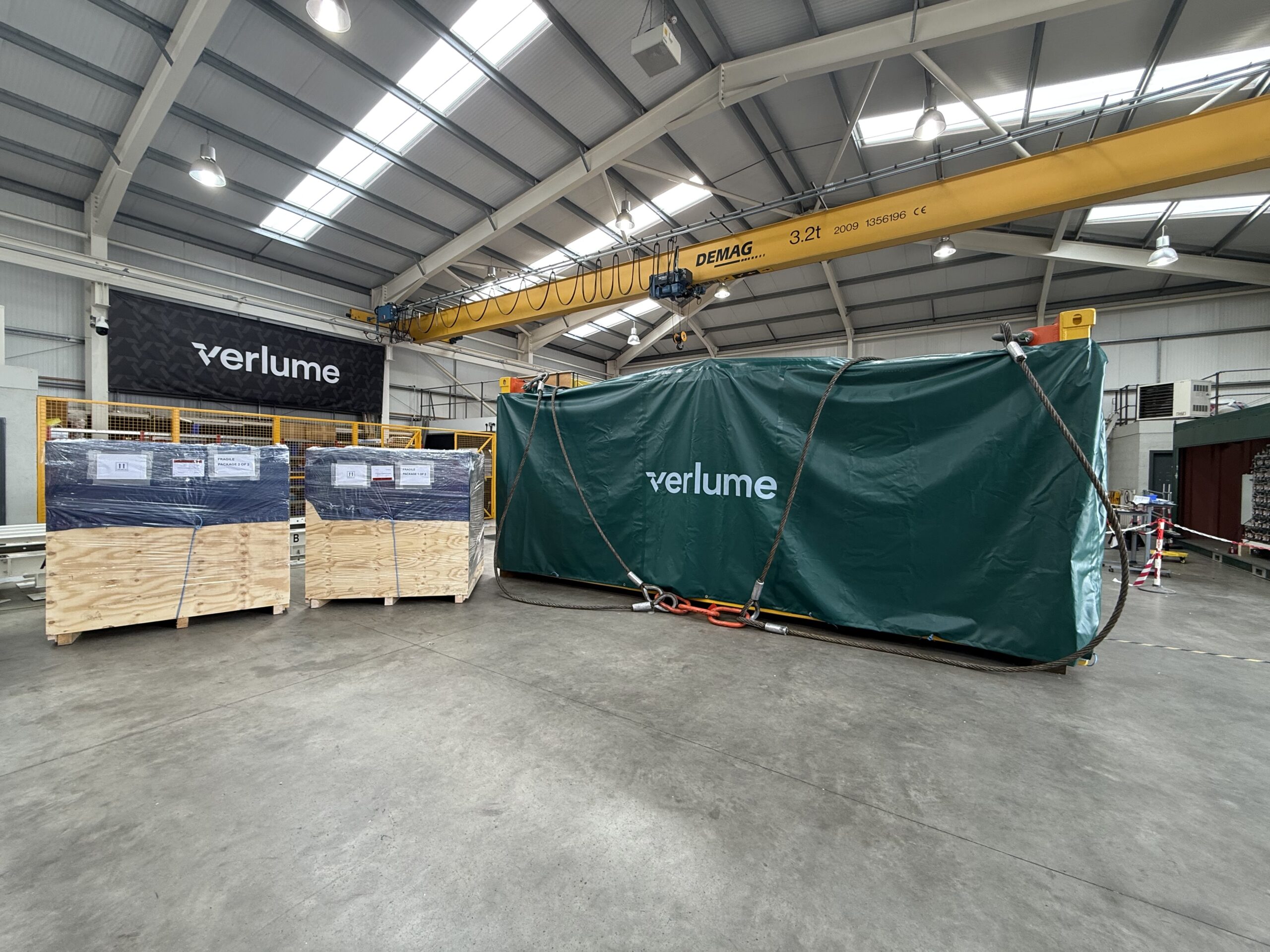
Image: Verlume recently delivered a Halo subsea battery energy storage system from order to delivery in under three months.
Verlume exists to solve one of the energy sector’s biggest emerging challenges: resilient offshore power.
We see ourselves as an energy transition company in the truest sense of the term. Across Oil & Gas, Offshore Wind and Defence, we develop subsea energy storage and power resilience systems designed to improve infrastructure reliability while supporting the wider shift toward lower-carbon, more electrified operations.
One area that is often oversimplified is the assumption that mature oil and gas assets have already delivered their full value. The reality is very different.
Even with established secondary recovery methods, many conventional fields around the world still only recover somewhere between 20% and 40% of the available resource. Enhanced recovery techniques can push this significantly further, depending on reservoir conditions and existing infrastructure capability.
Driving Greater Recovery from Existing Assets
The UK’s regulator, the North Sea Transition Authority (NSTA), has repeatedly highlighted recovery factor improvement as one of the largest remaining opportunities across the UK Continental Shelf.
Norway has recognised this for years. Continued investment in field optimisation, infrastructure life extension, electrification and new developments is helping maximise recovery while strengthening long-term energy resilience. The UK has the capability to move with the same urgency.
Technologies including seawater injection, artificial lift, side-tracks and subsea tiebacks all have the potential to materially increase recovery from existing offshore infrastructure. But as these assets mature, operational risk increasingly shifts away from the reservoir itself and toward the reliability of supporting electrical infrastructure.
The Growing Importance of Offshore Power Resilience
Improving the resilience of domestic production strengthens energy security, reduces dependence on imported energy and helps avoid the transfer of emissions overseas. At the same time, electrification creates further opportunities to reduce operational carbon intensity offshore.
This is where rapidly deployable subsea power systems become increasingly important.
Verlume recently delivered a Halo subsea battery energy storage system from order to delivery in under three months, demonstrating how quickly that resilient offshore power solutions can now be deployed when operators need them most.
Building on that capability, we are developing a Subsea Power Resilience Club aimed at reducing mobilisation timelines to single-digit days. The objective is straightforward, to give operators the ability to respond rapidly to emerging electrical infrastructure threats before they escalate into prolonged production outages.
A Practical Approach to Energy Security
In mature offshore basins, infrastructure resilience is no longer a future consideration, it is a practical engineering requirement.
The opportunity now is to combine enhanced recovery ambitions with modern subsea power capability to extend asset life, improve reliability and support a more resilient energy system overall.
We are keen to engage with operators looking to reinforce, upgrade or enhance offshore infrastructure resilience, particularly where enhanced recovery initiatives require additional subsea power capability.